I’ll never forget the morning I set up my first backyard feeder in a small Ohio suburb, hoping to spot a cardinal or two. Instead, I was greeted by a flurry of tiny brown birds, hopping and chirping like they owned the place. At first, I dismissed them as “just sparrows,” but as I watched them dart and sing, I realized these little guys were anything but ordinary. That moment sparked a decade-long obsession with sparrows, leading me to binoculars, field guides, and countless trails across North America. Sparrows may seem like plain little brown birds (or “LBBs,” as birders call them), but their diversity, songs, and quirky behaviors make them endlessly fascinating. In this guide, I’m sharing 17 sparrow species you should know, drawn from my own field notes and adventures, to help you spot and appreciate these feathered gems in your own backyard or beyond.
Why Sparrows Are Worth Your Attention
Sparrows are the unsung heroes of the bird world—small, adaptable, and brimming with character. They thrive in backyards, cities, and wild spaces, offering a front-row seat to nature’s resilience. Learning to identify them sharpens your birding skills and deepens your connection to the environment, as I discovered watching them transform my feeder into a daily soap opera.
Understanding Sparrow Families
Sparrows fall into two main groups: Old World sparrows (Passeridae) and New World sparrows (Passerellidae). Old World sparrows, like the House Sparrow, are tied to human habitats, while New World species, like the Song Sparrow, span diverse ecosystems. Knowing this split helped me untangle their subtle differences in the field.
Old World vs. New World Sparrows
Old World sparrows are chunkier, with thicker bills for cracking seeds.
New World sparrows often have sleeker builds and more varied songs.
Both share streaky brown plumage but differ in evolutionary roots.
Key Identification Features
Look for head patterns—stripes, spots, or bibs—to tell species apart.
Note size, bill shape, and tail length for quick clues.
Songs and calls are often the best identifiers in dense cover.
Common Backyard Sparrows
These sparrows are your feeder regulars, turning up like clockwork in most U.S. yards. Their familiarity makes them perfect for beginners, but their subtle markings keep you on your toes. My backyard feeder taught me to spot these first.
House Sparrow (Passer domesticus)
The ultimate urbanite, with males sporting a gray crown and black bib. I see them squabbling over crumbs at city cafes. Females are plainer but just as bold, thriving everywhere humans do.
- Size: 6–6.7 inches
- Habitat: Cities, farms, parks
- Distinctive Trait: Males’ black throat bib
Song Sparrow (Melospiza melodia)
A streaky brown bird with a central breast spot, singing melodic trills from shrubs. Their regional song variations blew my mind in Oregon’s wetlands. Common across North America, they’re a birder’s delight.
- Size: 5.5–7 inches
- Habitat: Wet areas, gardens
- Distinctive Trait: Brown streaks converging on breast
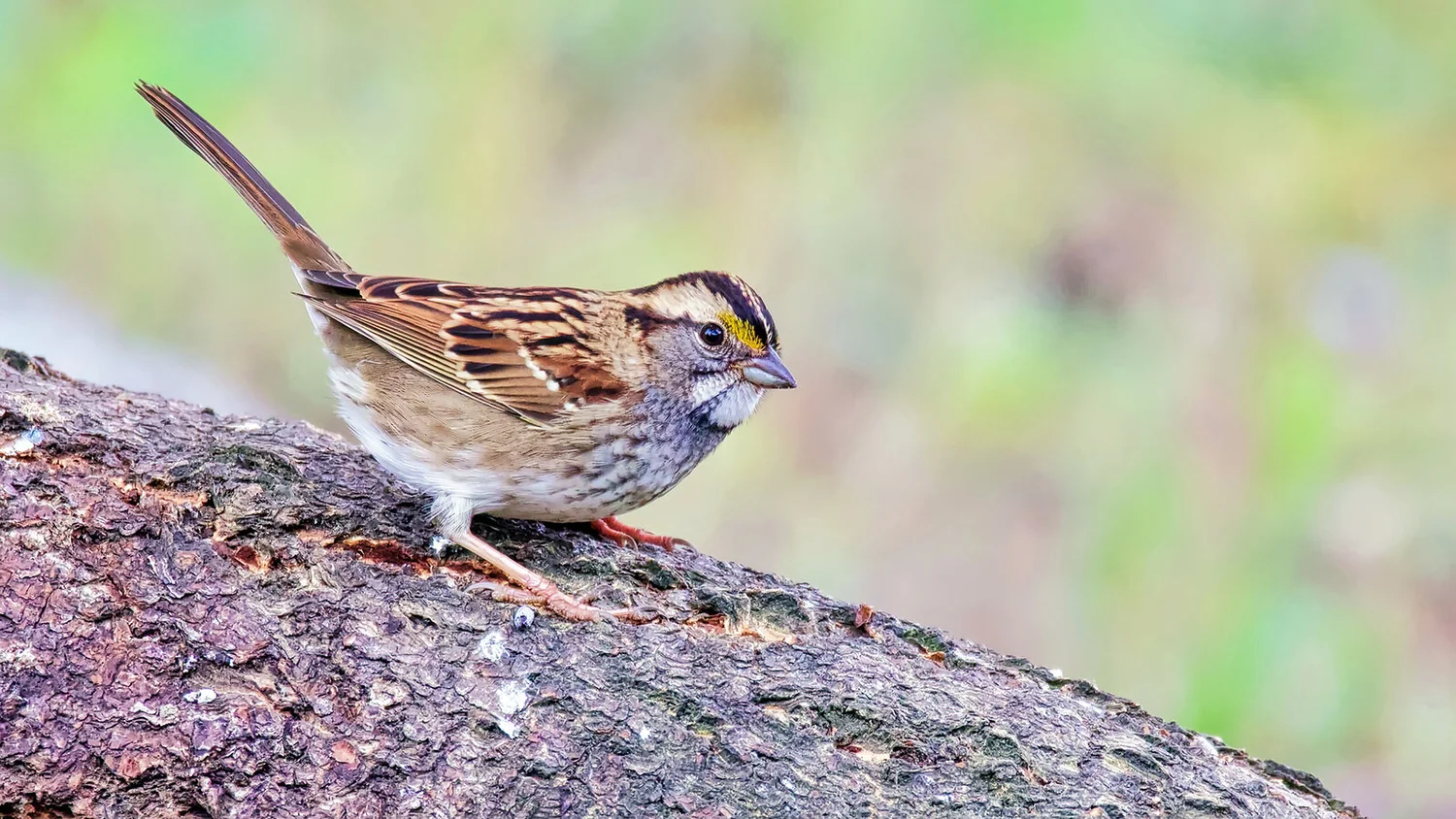
White-throated Sparrow (Zonotrichia albicollis)
Easily spotted by its snowy bib and yellow lores, this sparrow’s sweet whistle haunts winter feeders. I caught one serenading in a snowy Maine yard—pure magic. Look for white or tan head stripes.
- Size: 6.5–7.5 inches
- Habitat: Forests, feeders in winter
- Distinctive Trait: White throat patch
Chipping Sparrow (Spizella passerina)
A dainty sparrow with a rusty cap in summer, often perched on fences. Their sharp “chip” call echoed through my childhood summers in Virginia. They’re widespread and love open woodlands.
- Size: 5–5.5 inches
- Habitat: Suburbs, woodlands
- Distinctive Trait: Bright red cap (breeding season)
American Tree Sparrow (Spizelloides arborea)
With a rusty cap and bicolored bill, these winter visitors flock to cold regions. I spotted a group nibbling seeds in a frozen Iowa field. Their tinkling calls are a winter treat.
- Size: 5.5–6.3 inches
- Habitat: Tundra, feeders in winter
- Distinctive Trait: Central breast spot, rusty crown
Winter and Migratory Sparrows
These species show up during colder months or migration, adding variety to your birding list. Watching them at feeders during a blizzard taught me their resilience. They’re worth bundling up for.
Dark-eyed Junco (Junco hyemalis)
Often called “snowbirds,” juncos flash white tail feathers. Their slate-gray or brown forms vary by region—I love their crisp look in Colorado snow. Common at winter feeders.
- Size: 5.5–6.5 inches
- Habitat: Forests, suburbs in winter
- Distinctive Trait: White outer tail feathers
White-crowned Sparrow (Zonotrichia leucophrys)
Bold black-and-white head stripes make this sparrow unmistakable. I saw a flock in California’s chaparral, singing clear whistles. They migrate through much of the U.S.
- Size: 6.5–7.5 inches
- Habitat: Brushy areas, coasts
- Distinctive Trait: Striped head
Fox Sparrow (Passerella iliaca)
A chunky sparrow with a richly streaked breast, its sweet song stopped me dead on an Alaskan trail. Subspecies vary in color from red to sooty. They prefer thickets.
- Size: 6.5–7.5 inches
- Habitat: Dense shrubs, forests
- Distinctive Trait: Heavy breast streaks
Swamp Sparrow (Melospiza georgiana)
Found in marshes with a reddish cap and gray face, their trilling song is a wetland soundtrack. I spotted one in Florida’s Everglades, blending