A Shocking Disruption on Stage 15
On September 7, 2025, the Vuelta a España, one of cycling’s prestigious Grand Tours, was jolted by a startling incident. A pro-Palestinian protester, waving a Palestine flag, stumbled onto the racecourse near Castroverde, causing a minor crash during Stage 15. The collision, though not catastrophic, sent ripples of tension through the peloton and ignited debates about safety, politics, and the role of protest in sports.
The Incident: What Happened?
A Protester’s Misstep
With 56 kilometers left in the 167.8-kilometer stage from A Veiga to Monforte de Lemos, a protester emerged from a wooded area, clutching a Palestine flag. Tripping on a grassy verge, he disrupted a tightly packed group of riders, leading to a crash involving Spain’s Javier Romo and Edward Planckaert. Both riders resumed the race, but the incident underscored the risks of such disruptions.
Immediate Aftermath
Javier Romo, riding for Movistar, bore the brunt, with torn shorts and visible scrapes. He paused briefly before rejoining the peloton. Edward Planckaert of Alpecin-Deceuninck fell while avoiding Romo but continued without significant delay. The protester, detained by police, never reached the road, but his actions sparked chaos.
Context: Why the Protests?
Targeting Israel-Premier Tech
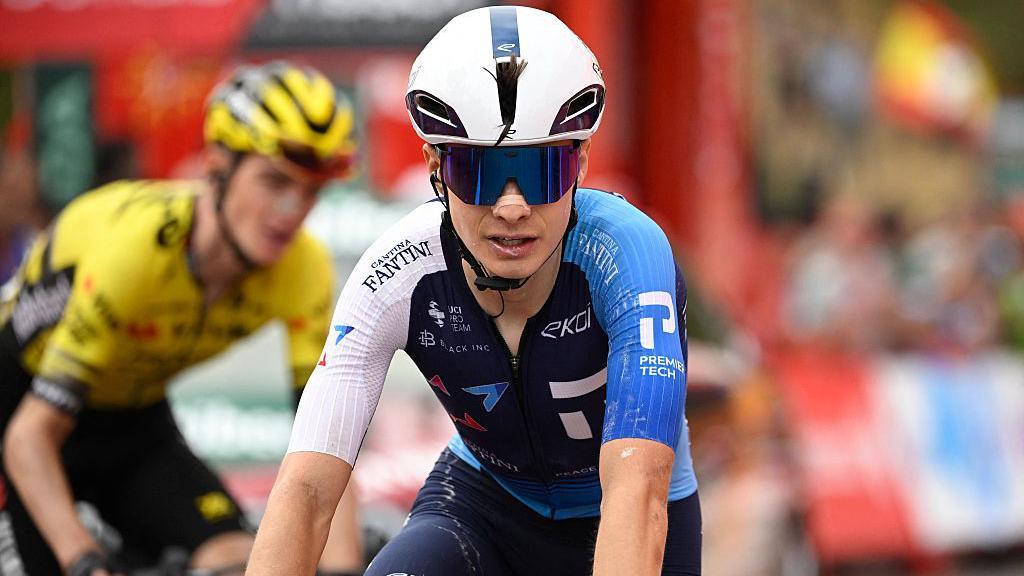
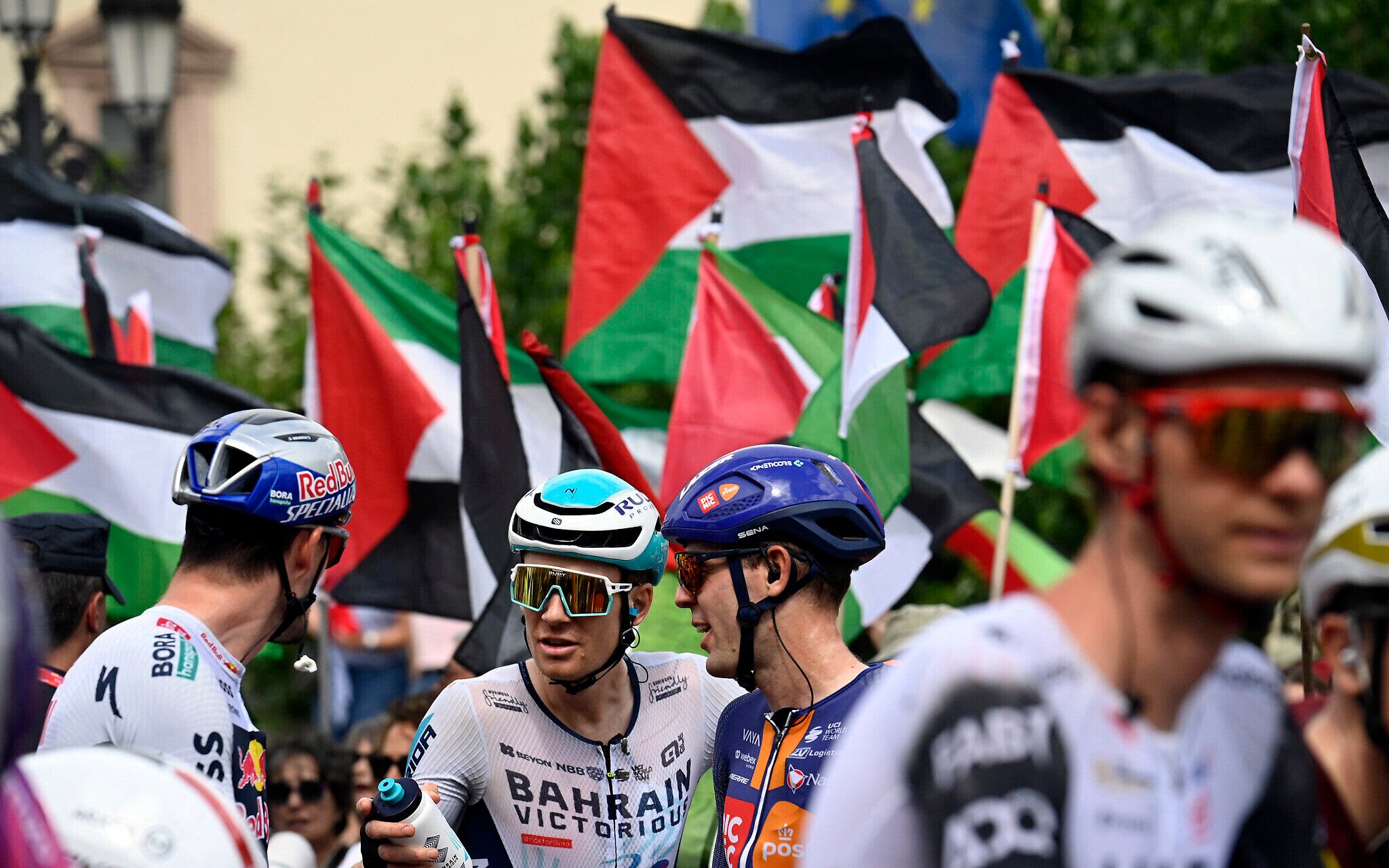
The protester was part of a broader campaign against Israel-Premier Tech, a cycling team co-owned by Israeli-Canadian billionaire Sylvan Adams. Demonstrators, waving Palestinian flags and holding banners reading “Neutrality is complicity,” have targeted the team throughout the 2025 Vuelta, citing Israel’s ongoing conflict in Gaza. The protests reflect Spain’s growing sympathy for the Palestinian cause, amplified by its government’s recognition of Palestine as a state in May 2025.
A Pattern of Disruptions
This wasn’t an isolated event. Stage 5’s team time trial saw protesters block Israel-Premier Tech’s path, forcing riders to stop. Stage 10 witnessed another crash when demonstrators ran onto the road, and Stage 11 was neutralized 3 kilometers from the finish in Bilbao due to safety concerns. The persistent protests have raised questions about the balance between free expression and rider safety.
The Human Impact: Riders Speak Out
Javier Romo’s Frustration
Imagine pedaling at breakneck speed, heart pounding, only to glance back and see a protester darting toward you. That’s what Javier Romo experienced. “I looked back, and suddenly I’m on the ground,” he told reporters, his voice tinged with exasperation. The crash left him battered, and he abandoned the race on Stage 16 due to injuries.
Jonas Vingegaard’s Perspective
Race leader Jonas Vingegaard, while retaining the red jersey, expressed empathy but concern. “People are doing it for a reason—it’s terrible what’s happening,” he told Danish TV. “But putting us in danger isn’t the way.” His words capture the riders’ dilemma: respecting the right to protest while pleading for safety.
The Race Goes On: Mads Pedersen’s Triumph
A Victory Amid Chaos
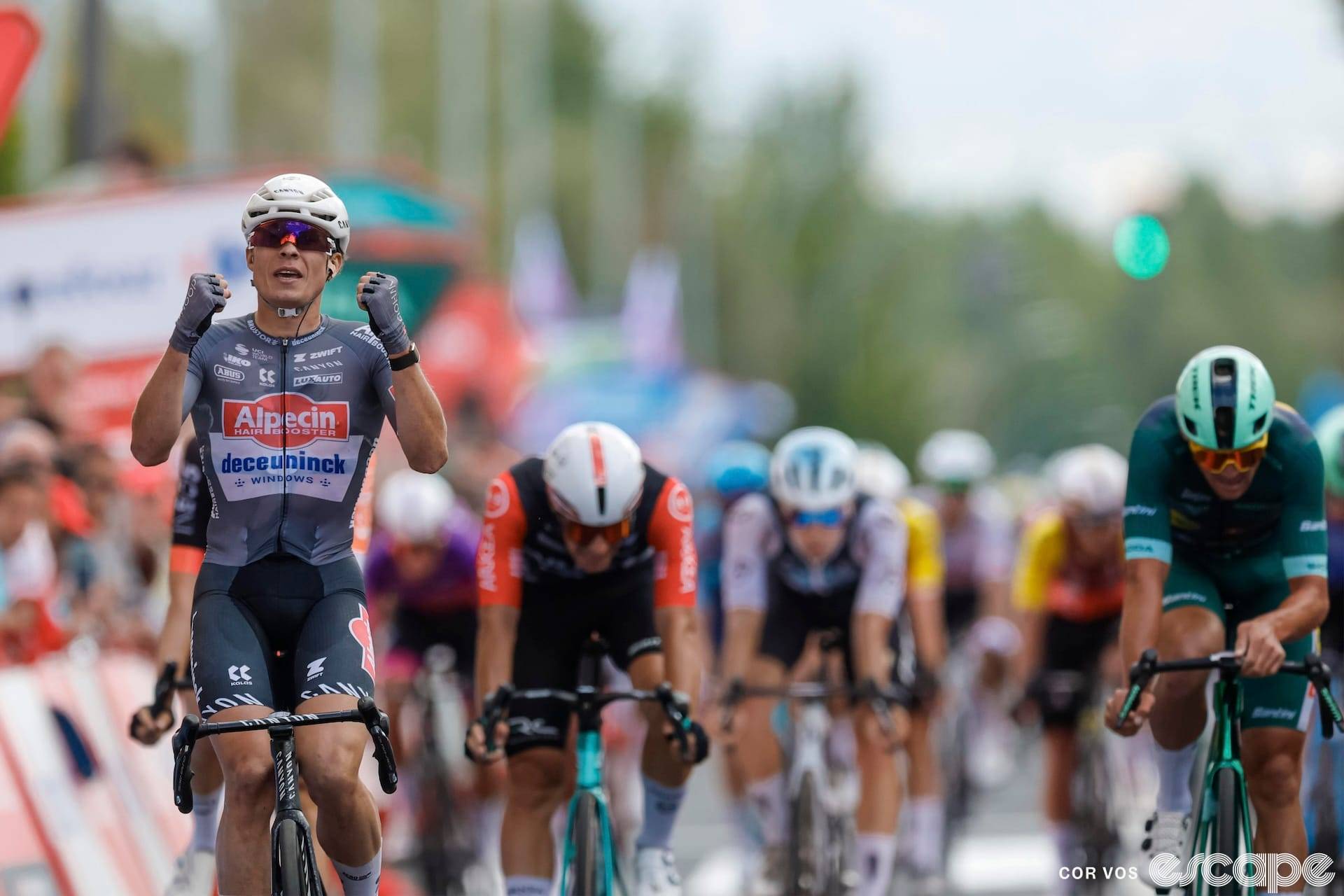
Despite the disruption, Stage 15 concluded with a thrilling sprint finish by Lidl-Trek’s Mads Pedersen. Bursting past Marco Frigo of Israel-Premier Tech, Pedersen clinched his fourth Vuelta stage win in four hours, two minutes, and thirteen seconds. “The boys worked so hard to make it possible,” he said, savoring the victory under intense scrutiny.
General Classification Unshaken
Jonas Vingegaard maintained his overall lead, with UAE Team Emirates’ riders trailing closely. The crash didn’t alter the general classification significantly, but it heightened tensions as the race approached its final week in Madrid. The peloton’s resilience shone through, even as protests loomed large.
By the Numbers: The Vuelta’s Turbulent 2025
The 2025 Vuelta a España has been a battleground for both cyclists and activists. Here’s a breakdown of key incidents:
| Stage | Date | Incident | Impact |
|---|---|---|---|
| Stage 5 | August 27, 2025 | Protesters blocked Israel-Premier Tech’s team time trial | Team finished 19th, 54 seconds behind winners |
| Stage 10 | September 2, 2025 | Protesters caused crash involving Simone Petilli | Minor injuries; race continued |
| Stage 11 | September 3, 2025 | Protests in Bilbao led to stage neutralization 3km from finish | No winner declared; times taken early |
| Stage 15 | September 7, 2025 | Protester caused crash involving Javier Romo and Edward Planckaert | Romo abandoned Stage 16 due to injuries |
| Stage 16 | September 9, 2025 | Protests forced stage to end 8km early at Castro de Herville | Egan Bernal won shortened stage |
Comparing 2025 Vuelta to Other Grand Tours
The 2025 Vuelta isn’t the first race to face protests. The Giro d’Italia and Tour de France saw similar disruptions, with Palestinian flags a common sight. However, the Vuelta’s protests have been more frequent and disruptive, prompting comparisons to the 1978 Vuelta, when Basque separatists canceled a stage by rolling logs onto the course.
Political Backdrop: Spain’s Stance
A Nation Divided
Spain’s left-wing government, led by Prime Minister Pedro Sánchez, has been vocal about Gaza, labeling the situation a “genocide” and imposing an arms embargo on Israel. Foreign Minister José Manuel Albares even suggested removing Israel-Premier Tech from the Vuelta, a stance that drew support from some but criticism from others, including Israeli Prime Minister Benjamin Netanyahu, who called the team a source of national pride.
The Basque Connection
The Basque Country, where Stage 11’s protests peaked, has a history of solidarity with Palestine. Hundreds lined Bilbao’s streets, waving flags and chanting slogans. This regional sentiment, combined with Spain’s broader geopolitical shift, has amplified the protests’ visibility and impact.
Pros and Cons of Protests in Sports
Pros
- Raising Awareness: Protests draw global attention to humanitarian issues, like the Gaza conflict.
- Freedom of Expression: Demonstrators exercise their right to voice dissent in a high-profile setting.
- Pressure for Change: Targeting teams like Israel-Premier Tech can spark broader political discussions.
Cons
- Rider Safety: Protests have caused crashes and near-misses, endangering athletes.
- Race Disruptions: Neutralized stages and delays frustrate riders and fans alike.
- Political Overreach: Mixing sports and politics risks alienating audiences and undermining competition.
Safety Concerns: Riders and Organizers Respond
The Riders’ Vote
On September 10, riders voted to continue the Vuelta but warned they might abandon the race if protests persisted. The Professional Cyclists’ Association (CPA) emphasized safety, with riders like Tom Pidcock stating, “Everyone has the right to protest, but putting us in danger isn’t the way forward.” The peloton’s frustration is palpable, yet their commitment to racing endures.
Organizers’ Dilemma
Vuelta director Javier Guillén condemned the disruptions, vowing legal action against protesters. “These actions are intolerable,” he said, citing physical harm to riders. Enhanced security, including extra barriers and police presence, has been deployed, but patrolling a 1,958-mile race across four countries remains a logistical nightmare.
Solutions: Balancing Protest and Safety
Short-Term Fixes
- Increased Security: Deploy more police and barriers at high-risk areas like finishes.
- Protest Zones: Designate safe areas for demonstrators to avoid racecourse intrusions.
- Rider Briefings: Inform teams of potential protest hotspots to enhance preparedness.
Long-Term Strategies
- Neutrality Policies: Strengthen UCI’s stance on political neutrality in sports.
- Dialogue with Activists: Engage protest groups to channel dissent peacefully.
- Technology Aids: Use drones and AI to monitor race routes for unauthorized activity.
The Bigger Picture: Sports as a Protest Platform
A Historical Perspective
Sports have long been stages for protest, from the 1968 Olympics’ Black Power salute to Colin Kaepernick’s NFL kneel. The Vuelta’s protests echo this tradition, but their physical disruptions set them apart. As cyclist Louis Vervaeke noted, “We’re just cyclists doing our job.” The challenge lies in respecting free speech while ensuring safety.
A Fan’s Take: Caught in the Crossfire
As a cycling fan, I’ve watched the Vuelta for years, marveling at the grit of riders like Vingegaard. But this year, my heart sank seeing Romo crash. It’s thrilling to cheer a sprint finish, not to wince at chaos. Fans want racing, not politics, yet the protests remind us of real-world stakes beyond the peloton.
People Also Ask (PAA)
What happened during the Vuelta a España 2025 protests?
Pro-Palestinian protesters disrupted multiple stages, notably causing a crash on Stage 15 when a demonstrator stumbled near the racecourse, affecting riders Javier Romo and Edward Planckaert. Protests targeted Israel-Premier Tech, leading to stage neutralizations and heightened security.
Why are protesters targeting Israel-Premier Tech?
Demonstrators oppose the team’s participation due to its Israeli ownership and Israel’s actions in Gaza. Spain’s recognition of Palestine and public sentiment have fueled protests, with banners calling for a boycott of the team.
How did the Vuelta organizers respond to the protests?
Organizers neutralized Stage 11, enhanced security with police and barriers, and vowed to file complaints against protesters. Director Javier Guillén condemned actions endangering riders, emphasizing the need for safe racing conditions.
Where can I learn more about the Vuelta a España 2025?
Visit lavuelta.es for official updates, race schedules, and live coverage. Cyclingnews and BBC Sport offer detailed analyses and stage recaps for fans seeking in-depth insights.
FAQ Section
What caused the crash on Stage 15 of the Vuelta a España 2025?
A pro-Palestinian protester, waving a Palestine flag, tripped near the racecourse, startling riders and causing Javier Romo and Edward Planckaert to crash. The incident occurred 56 kilometers from the finish in Castroverde.
How have protests affected the 2025 Vuelta a España?
Protests have disrupted multiple stages, including a neutralized Stage 11, a blocked team time trial on Stage 5, and crashes on Stages 10 and 15. They’ve targeted Israel-Premier Tech, prompting safety concerns and team kit changes.
What measures are in place to prevent further disruptions?
Vuelta organizers have increased police presence, added barriers, and engaged with the UCI to ensure rider safety. They’ve also condemned protests that endanger the peloton and promised legal action.
Can protests in sports be conducted safely?
Yes, by designating protest zones away from racecourses and engaging with activists to ensure peaceful demonstrations. Enhanced security and technology like drones can also prevent disruptions without stifling free speech.
How can I support safe cycling events?
Follow races on platforms like cyclingnews.com for updates, advocate for rider safety on social media, and support organizations like the CPA that prioritize athlete welfare.
A Call to Action: Keep the Race Rolling
The 2025 Vuelta a España is a testament to cycling’s thrill and humanity’s complexities. While protests highlight urgent global issues, they shouldn’t endanger athletes who train tirelessly to compete. Fans can play a role by amplifying calls for safe, fair racing—share your thoughts on platforms like X or support teams via lavuelta.es. Let’s keep the Vuelta about pedals, not politics, while honoring the right to speak out. For real-time updates or to explore cycling’s broader impact, check out x.ai/grok. Together, we can ensure the race finishes strong in Madrid.