Why Birds Are Nature’s Masterpieces
Birds are living canvases, splashing color and grace across skies, forests, and wetlands. I’ve always been captivated by their beauty, like the time I spotted a resplendent quetzal shimmering in a Costa Rican rainforest, its tail feathers flowing like a green comet. This list of the top 15 most beautiful birds celebrates their stunning plumage, unique behaviors, and the awe they inspire. Let’s explore these feathered wonders that make our world a brighter place.
What Makes a Bird Beautiful?
Beauty in birds comes from vibrant colors, intricate patterns, and graceful movements. From iridescent feathers to melodious calls, each species has a unique charm. Understanding their habitats and behaviors adds depth to their visual appeal.
The Role of Color in Bird Beauty
Bright colors often signal health, mating prowess, or camouflage. Tropical birds like parrots use vivid hues to attract mates, while others blend into their surroundings. These adaptations make their beauty both functional and breathtaking.
Unique Features That Stand Out
Beyond color, features like long tails, elaborate crests, or synchronized dances set some birds apart. For example, the peacock’s tail is a fan of dazzling eyespots. These traits make certain species unforgettable.
Cultural and Emotional Impact
Birds have inspired art, myths, and conservation efforts worldwide. Their beauty connects us to nature, evoking wonder and a desire to protect them. Spotting a rare bird feels like uncovering a hidden gem.
The Top 15 Most Beautiful Birds
Here are 15 of the world’s most stunning birds, chosen for their vibrant colors, unique features, and global appeal. Each entry includes key details to help you appreciate their splendor.
1. Resplendent Quetzal
This Central American bird dazzles with its iridescent green and red plumage and long, flowing tail. Revered by Mayan cultures, it’s a symbol of freedom. Spot it in cloud forests, gliding like a living jewel.
- Habitat: Central American cloud forests
- Key Feature: Long, vibrant tail feathers
- Best Place to See: Monteverde, Costa Rica
2. Scarlet Macaw
With its bold red, blue, and yellow feathers, the scarlet macaw is a tropical showstopper. Its loud squawks echo through rainforests, making it hard to miss. I once saw a flock in Peru, painting the sky with color.
- Habitat: Central and South American rainforests
- Key Feature: Vivid, multicolored plumage
- Best Place to See: Tambopata National Reserve, Peru
3. Mandarin Duck
This East Asian duck sports a kaleidoscope of colors, with orange “sails” on its wings and a glossy purple chest. Males are especially striking during mating season. They’re a favorite in ornamental ponds for their elegance.
- Habitat: East Asian rivers and forests
- Key Feature: Ornate, multicolored feathers
- Best Place to See: Yiwu Wetland, China
4. Atlantic Puffin
Nicknamed the “clown of the sea,” the puffin’s bright orange beak and black-and-white plumage are adorable. Its waddling gait adds charm. They dive gracefully to catch fish in icy waters.
- Habitat: North Atlantic coastlines
- Key Feature: Colorful, triangular beak
- Best Place to See: Iceland’s Westman Islands
5. Keel-Billed Toucan
This toucan’s rainbow-colored bill looks like a piece of modern art. Its green, red, and yellow beak contrasts with its black feathers. You can’t help but smile at its quirky appearance.
- Habitat: Central and South American jungles
- Key Feature: Oversized, multicolored bill
- Best Place to See: Corcovado National Park, Costa Rica
6. Lilac-Breasted Roller
This African bird is a flying rainbow, with lilac, turquoise, and green feathers. It performs acrobatic flights during mating displays. Seeing one perched on a savanna branch is pure magic.
- Habitat: African savannas and woodlands
- Key Feature: Vibrant, multicolored plumage
- Best Place to See: Serengeti National Park, Tanzania
7. Blue Jay
Common in North America, the blue jay’s striking blue and white feathers and intelligent behavior make it a backyard favorite. Its crest adds a regal touch. I love watching them steal peanuts from my feeder.
- Habitat: North American forests and suburbs
- Key Feature: Bold blue and white patterns
- Best Place to See: Eastern United States
8. Indian Peafowl (Peacock)
The peacock’s iridescent blue-green tail, fanned into a dazzling display, is iconic. Its shimmering eyespots mesmerize onlookers. Females, though plainer, have a subtle elegance.
- Habitat: Indian subcontinent, widespread globally
- Key Feature: Extravagant tail feathers
- Best Place to See: Ranthambore National Park, India
9. Hyacinth Macaw
The largest parrot, this macaw’s cobalt-blue feathers glow in the sunlight. Its powerful beak cracks nuts with ease. Its vibrant color makes it a standout in the Pantanal wetlands.
- Habitat: South American rainforests and wetlands
- Key Feature: Brilliant blue plumage
- Best Place to See: Pantanal, Brazil
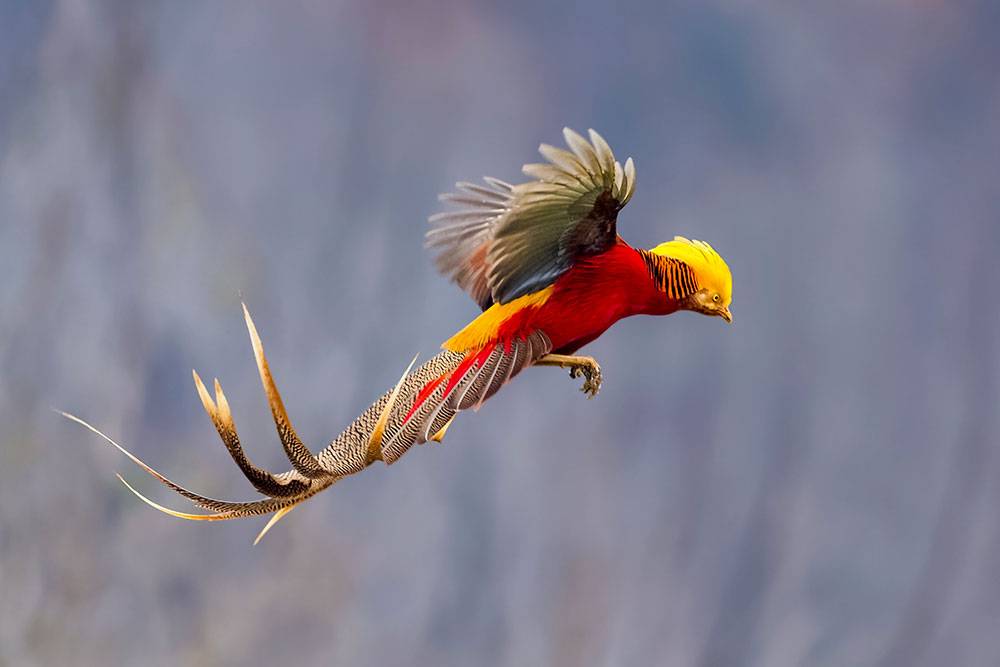
10. Golden Pheasant
This Chinese bird, with its golden crest and red-and-yellow body, looks like a living flame. Males strut to impress during mating season. It’s a favorite in aviaries for its vivid colors.
- Habitat: Chinese forests and mountains
- Key Feature: Fiery, multicolored feathers
- Best Place to See: Qinling Mountains, China
11. Victoria Crowned Pigeon
This large pigeon from New Guinea has a stunning blue-gray body and a lacy, fan-like crest. Its regal appearance is unmatched. It’s a rare treat to see in the wild.
- Habitat: New Guinea rainforests
- Key Feature: Ornate, feathered crest
- Best Place to See: Papua New Guinea
12. Kingfisher (Common Kingfisher)
With its electric-blue back and orange underbelly, the kingfisher is a riverside jewel. Its lightning-fast dives for fish are mesmerizing. Spotting one feels like catching a glimpse of nature’s royalty.
- Habitat: Rivers and lakes across Europe, Africa, and Asia
- Key Feature: Vibrant blue and orange feathers
- Best Place to See: River Thames, UK
13. Bohemian Waxwing
This sleek bird’s silky feathers blend peach, gray, and yellow, with waxy red tips on its wings. Its melodic trills add to its charm. Flocks swoop through northern forests in winter.
- Habitat: Northern forests of Europe and North America
- Key Feature: Waxy wingtips and soft colors
- Best Place to See: Yukon, Canada
14. Nicobar Pigeon
This pigeon’s iridescent feathers shimmer in shades of green, blue, and bronze. Its chunky build and short tail add quirkiness. It’s a hidden gem of the Andaman Islands.
- Habitat: Andaman and Nicobar Islands
- Key Feature: Iridescent, metallic feathers
- Best Place to See: Nicobar Islands, India
15. Gouldian Finch
This Australian finch sports a palette of red, green, yellow, and blue, like a tiny rainbow. Its vibrant colors make it a favorite among birdwatchers. It’s a delicate beauty in the outback.
- Habitat: Australian grasslands
- Key Feature: Bright, multicolored head
- Best Place to See: Kakadu National Park, Australia
Comparison: Tropical vs. Temperate Birds
| Feature | Tropical Birds | Temperate Birds |
|---|---|---|
| Color | Vibrant, bold (e.g., macaws, quetzals) | Subtle, earthy (e.g., blue jays, waxwings) |
| Habitat | Rainforests, jungles | Forests, suburbs, coastlines |
| Behavior | Flashy mating displays | Migratory, social flocks |
| Visibility | Often elusive in dense forests | More common in open areas |
| Conservation | Many face habitat loss | Some adapt well to human areas |
Pros and Cons of Birdwatching Tropical Birds
- Pros: Stunning colors, exotic behaviors, unique habitats.
- Cons: Hard to access, often endangered, requires travel.
Pros and Cons of Birdwatching Temperate Birds
- Pros: Easier to spot, accessible locations, diverse species.
- Cons: Less vibrant colors, seasonal migration limits viewing.
How to Observe These Birds
Seeing these birds in their natural habitats is a rewarding experience. Here’s how to plan your birdwatching adventure and capture their beauty responsibly.
Best Tools for Birdwatching
- Binoculars: A pair like the Nikon Monarch 5 (available at REI) offers clear views.
- Field Guide: Books like The Sibley Guide to Birds help identify species.
- Camera: A DSLR or smartphone with a zoom lens captures stunning shots.
- Notebook: Record sightings to track your birdwatching journey.
Where to Find These Birds
Check conservation sites like BirdLife International for global hotspots. Local birding groups or apps like eBird guide you to nearby sightings. Join guided tours in places like Costa Rica or Australia for expert help.
Ethical Birdwatching Tips
- Keep your distance to avoid disturbing nests or feeding areas.
- Avoid playback calls, which can stress birds.
- Stick to trails to protect fragile habitats.
- Support conservation efforts through organizations like Audubon.
People Also Ask (PAA)
What is the most beautiful bird in the world?
The resplendent quetzal often tops lists for its iridescent green and red feathers and long, flowing tail. Found in Central American cloud forests, it’s a symbol of beauty and freedom. See it in Monteverde, Costa Rica.
Where can I see colorful birds?
Tropical regions like Costa Rica, Brazil, and Australia host vibrant species like macaws, quetzals, and Gouldian finches. Check local sanctuaries or national parks, such as Tambopata or Kakadu, for guided tours.
What tools do I need for birdwatching?
A good pair of binoculars, a field guide, and a notebook are essential. Apps like eBird or Merlin Bird ID help identify species on the go. A camera with a zoom lens is great for capturing photos.
Are these birds endangered?
Some, like the hyacinth macaw and Victoria crowned pigeon, face threats from habitat loss. Check IUCN Red List for conservation status and support efforts to protect them.
FAQ
Why are some birds so colorful?
Bright colors often attract mates or signal health. In tropical environments, vibrant hues help birds stand out in dense forests. Temperate birds may have subtler colors for camouflage.
Can I see these birds in zoos or sanctuaries?
Yes, many species like macaws, toucans, and pheasants are found in zoos or aviaries. Check places like the San Diego Zoo or local wildlife sanctuaries for close-up views.
How can I photograph birds without disturbing them?
Use a zoom lens to keep your distance, shoot during early morning or late afternoon for soft light, and avoid sudden movements. A tripod stabilizes shots for clearer images.
What’s the best time of year for birdwatching?
Spring and fall are ideal due to migration patterns, but it varies by species and location. Research your target bird’s habits on sites like eBird for optimal timing.
How can I support bird conservation?
Donate to organizations like BirdLife International or volunteer at local sanctuaries. Avoid buying products linked to deforestation, which harms bird habitats.
Tips for Birdwatching Success
- Start Early: Birds are most active at dawn, offering great viewing opportunities.
- Learn Calls: Familiarize yourself with bird songs using apps like Merlin Bird ID.
- Be Patient: Wait quietly in one spot to let birds come to you.
- Join a Group: Local birding clubs offer guided trips and expert tips.
- Record Sightings: Use a journal or app to track species and locations.
Conclusion
The world’s most beautiful birds, from the resplendent quetzal to the Gouldian finch, are a testament to nature’s artistry. Their vibrant colors and unique behaviors inspire awe, like the moment I watched a lilac-breasted roller soar across the Serengeti. Whether you’re a seasoned birder or a curious beginner, these 15 species invite you to explore their habitats and capture their beauty. Grab your binoculars, visit a local park, or plan a trip to a tropical hotspot—your next feathered encounter awaits. For more birdwatching tips, explore National Audubon Society or join a local birding group.